🚚 FREE SHIPPING on orders over $99•✓ 30-Day Money Back Guarantee•⭐ Serving Okanagan Since 1994•🚚 FREE SHIPPING on orders over $99•✓ 30-Day Money Back Guarantee•⭐ Kelowna's Favorite Vacuum Store since 1994
Central Vacuum Filtration: Every Type Ranked From Worst to Best
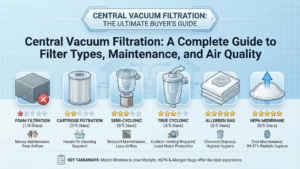
When shopping for a central vacuum, most conversations focus on motors and performance numbers. But central vacuum filtration deserves just as much attention. Your filter serves two critical functions: protecting the motor from fine dust particles that cause premature wear, and determining the quality of air exhausted back into — or out of — your living space.
The type of central vacuum filtration you choose also determines how much maintenance you’ll deal with for the life of the unit. This article ranks every major filtration type from worst to best, so you can match the right option to your home and lifestyle.
Why Central Vacuum Filtration Matters
Your central vacuum system is a built-in appliance installed out of sight in a garage, basement, or utility room. Once it’s in, most homeowners forget about it — until suction drops or the canister overflows.
That’s precisely why central vacuum filtration is so important. A good filtration system should protect the motor, maintain consistent airflow, and ideally require little to no maintenance. The worst filtration systems demand regular hands-on cleaning that exposes you to the exact allergens, bacteria, dust mites, and pet dander you vacuumed up in the first place.
Even if your central vacuum is vented outdoors, filtration still matters. Without adequate filtering, fine dust passes through or around the motor, causing internal wear that shortens motor life. And if your system vents indoors — into a basement or garage — efficient central vacuum filtration is essential to avoid coating everything nearby in fine dust.
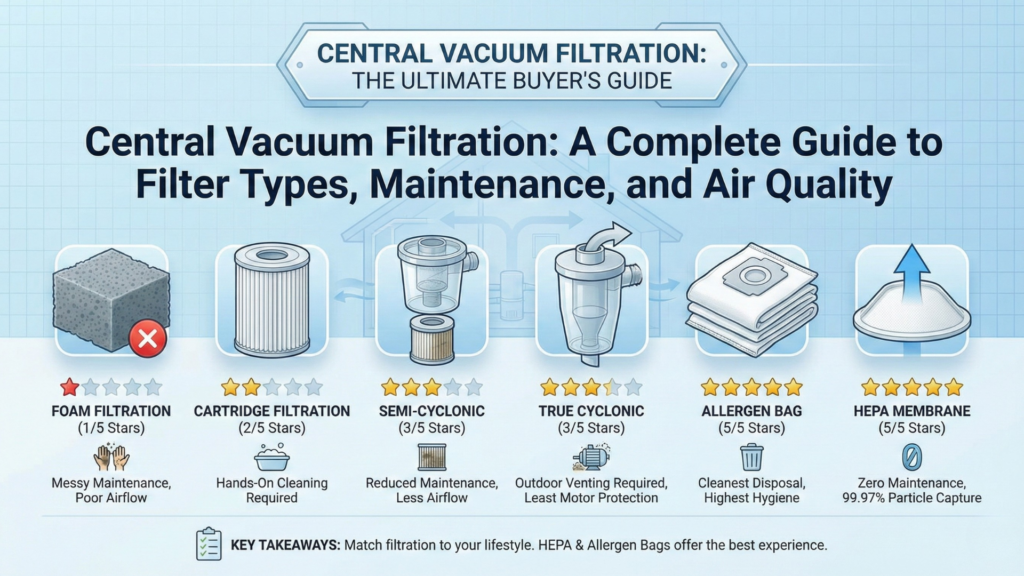
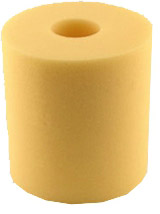
Foam Filtration — ⭐ (1 out of 5)
Foam filtration is the cheapest form of central vacuum filtration available — and the least desirable.
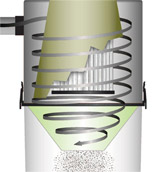
These systems may use a cyclonic action to remove larger debris from the airstream, with the foam filter catching finer particles the cyclone misses. The problem is that as the foam filter loads with dirt, airflow diminishes steadily. Eventually you must remove the filter and wash it or replace it entirely.
This means reaching inside a dirty, contaminated unit and handling a filter saturated with bacteria, dust mites, pollen, and everything else you’ve vacuumed. It’s an unpleasant task most homeowners delay, leading to degraded performance over time.
Verdict: Cheapest to buy, but the worst ownership experience. Frequent messy maintenance and poor long-term performance.
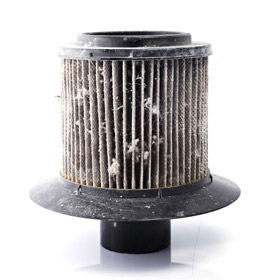
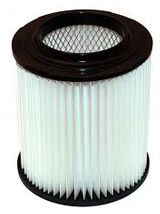
Cartridge Filtration — ⭐⭐ (2 out of 5)
Cartridge central vacuum filtration is a step up from foam, offering better airflow performance and generally better particle capture.
Like foam systems, cartridge filters may rely on cyclonic action to separate the bulk of debris, with the cartridge catching finer particles. However, the maintenance story is similar — when the cartridge becomes clogged, it must be washed or replaced. This still involves reaching inside the unit and direct contact with accumulated contaminants.
Verdict: Better filtering than foam, but still requires hands-on maintenance with contaminated components.
Semi-Cyclonic (Filter + Cyclone) — ⭐⭐⭐ (3 out of 5)
Some systems are marketed as “cyclonic” but actually use a cyclone combined with a secondary foam or cartridge filter. This is more accurately described as semi-cyclonic central vacuum filtration.
The cyclonic action separates the majority of debris from the airstream, while the secondary filter captures fine particles that slip through. Because the cyclone handles most of the work, the filter loads up more slowly — meaning less frequent maintenance intervals.
The trade-off is that the airflow performance of a true cyclonic system is somewhat reduced by the secondary filter’s resistance. And you’ll still need to wash or replace that filter eventually.
Verdict: A decent middle ground. Cyclonic separation reduces how often you deal with the filter, but maintenance is still required.
True Cyclonic — ⭐⭐⭐ (3 out of 5)
True cyclonic central vacuum filtration uses no secondary filter at all. These systems rely exclusively on cyclonic separation to remove dirt and debris from the airstream.
The upside is performance. When clean, a true cyclonic system offers the best unrestricted airflow of any filtration method — there’s no filter gradually clogging and reducing performance.
The downside is motor protection. Without a secondary filter, more fine dust passes through or near the motor. These systems must be exhausted outdoors, since the exhaust air isn’t clean enough to vent inside your living space.
And while there’s no traditional filter, a protective screen inside the unit still catches larger particles the cyclone misses. Over time, carpet fibers, hair, and other debris collect on this screen and need to be cleaned — which still means reaching inside the unit.
Very few manufacturers produce true cyclonic-only systems, which tells you something about how the industry views the importance of secondary central vacuum filtration.
Verdict: Best unrestricted airflow, but least motor protection. Requires outdoor venting and occasional screen cleaning.
Allergen Bag Filtration — ⭐⭐⭐⭐⭐ (5 out of 5)
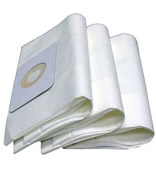
Modern allergen bags are a far cry from the paper bags of decades past. Today’s bags are multi-layer, cloth-like constructions that capture the vast majority of allergens and pollutants. Even when full, the bag’s exterior remains clean — so you’re not exposed to a dust plume when you remove it.
This is the cleanest form of central vacuum filtration available. When you replace the bag, you’re discarding all accumulated dust, allergens, and bacteria in a sealed package and starting fresh with a brand-new filter surface. There’s no washing, no shaking, no reaching into a contaminated canister.
The cost of replacement bags is a recurring but modest expense. A typical bag lasts several months of regular use.
Verdict: The cleanest, most hygienic option. No contaminant exposure, no messy maintenance — just replace the bag.
Maintenance-Optional Filtration — ⭐⭐⭐⭐ (4 out of 5)
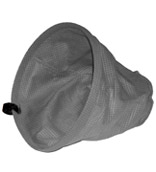
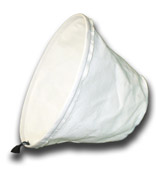
Sometimes called “inverted bag” or “self-cleaning” central vacuum filtration, this is one of the most popular methods in the industry.
These permanent filters flex upward when the vacuum is running (pulled by suction) and drop downward when it shuts off. This movement shakes loose excess dust from the filter surface, allowing it to fall into the dirt canister.
The term “self-cleaning” is somewhat misleading — the filter doesn’t truly clean itself. Dust cake buildup on the surface is normal and actually increases filtration efficiency over time, though at the expense of some airflow. The flexing action simply prevents excessive buildup from significantly restricting performance.
For most homeowners, no maintenance is required. If you ever do want to clean it, you can do so without touching contaminants: wrap a garbage bag around the unit opening, reach inside with the bag, give the filter a shake, and remove the bag.
These filters last the life of the system — no recurring replacement costs.
Verdict: Excellent low-maintenance option. Rarely needs attention, good filtration, and permanent — no replacement costs.
HEPA Membrane Filtration — ⭐⭐⭐⭐⭐ (5 out of 5)
HEPA membrane central vacuum filtration is the premium bagless option and the gold standard for the industry.
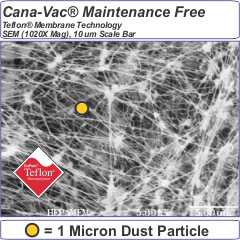
Like the maintenance-optional filter, a HEPA membrane flexes up and down with the vacuum cycle. But it has a critical advantage: the membrane is coated with a non-stick surface that prevents dust cake from adhering. This means the filter stays cleaner and maintains better airflow performance over its lifespan — without any maintenance at all.
The filtration performance is exceptional. HEPA membrane filters capture 99.97% of particles at 0.3 microns — the size of most bacteria. For reference:
Pollens: 10 to 1,000 microns. Human hair: 40 to 300 microns. Mold spores: 10 to 30 microns.
A HEPA membrane filter captures virtually all of these — making it the ideal choice for allergy sufferers or anyone concerned about indoor air quality.
One important note: the color of a filter does not indicate its type or efficiency. Some filters look similar but perform very differently. Always check the product specifications or ask the retailer to confirm the central vacuum filtration type.
Verdict: The best of both worlds — top-tier filtration with zero maintenance. The premium choice for bagless systems.
Filtration Efficiency Explained
When comparing central vacuum filtration specs, you’ll encounter efficiency ratings tied to particle sizes. For example, a filter rated at .1 micron at 95% efficiency means 95% of particles at 0.1 microns are captured and 5% pass through. A .1 micron at 99% efficiency rating means only 1% passes through.
The higher the efficiency relative to particle size, the more protection the filter offers to both the motor and your living environment. If your unit vents outdoors, filtration efficiency is less critical for air quality but still matters for motor protection. If the unit vents indoors — into a basement, utility room, or garage — high-efficiency central vacuum filtration is essential.
Choosing the Right Central Vacuum Filtration for Your Home
Want the least maintenance and best hygiene? Allergen bags or HEPA membrane filtration. Both earn top marks.
Prefer bagless with zero maintenance? HEPA membrane is the clear winner.
Prefer bagless at a lower cost? Maintenance-optional (inverted bag) filtration is an excellent choice.
Need maximum unrestricted airflow? True cyclonic — but you must vent outdoors and accept less motor protection.
On a tight budget? Semi-cyclonic with a secondary filter offers a reasonable compromise.
Frequently Asked Questions About Central Vacuum Filtration
What is the best filtration for a central vacuum? HEPA membrane filtration and allergen bag filtration both earn the highest ratings. HEPA membrane is the best bagless option (zero maintenance, 99.97% particle capture), while allergen bags are the cleanest option overall with easy replacement.
Do central vacuums need filters if they vent outdoors? Yes. The primary function of the filter is to protect the motor from fine dust particles. Even systems vented outdoors benefit from filtration to prevent internal motor wear and extend system life.
How often do you change a central vacuum filter? It depends on the type. Allergen bags typically last several months. Foam and cartridge filters need cleaning every few months. Maintenance-optional and HEPA membrane filters are permanent and last the life of the system with no replacement needed.
Are central vacuums good for allergies? Yes. Central vacuum systems have been clinically shown to reduce allergy symptoms by removing allergens from the living space. Systems with HEPA membrane or allergen bag filtration provide the best results for allergy sufferers.
What does HEPA mean in a central vacuum? HEPA stands for High Efficiency Particulate Air. A true HEPA filter captures 99.97% of particles at 0.3 microns in size — small enough to trap most bacteria, pollen, mold spores, and dust mite waste.
This is the final article in our Central Vacuum Buyer’s Guide series. Have questions about choosing the right system? Contact us — we’ve been helping homeowners find the perfect central vacuum since 1994.
When shopping for a central vacuum, most conversations focus on motors and performance numbers. But central vacuum filtration deserves just as much attention. Your filter
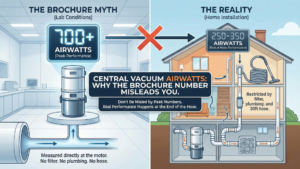
In our previous article on airwatts, we explained why the most popular vacuum performance metric is misleading. But if airwatts aren’t the right way to
If you’ve spent any time researching central vacuums, you’ve almost certainly come across the term “airwatts.” It’s the single most commonly cited performance metric in
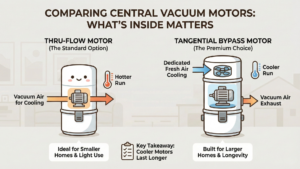
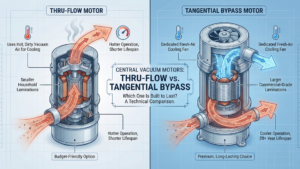
Knowing the difference between Thru-Flow and Tangential Bypass motors is a great start — but comparing central vacuum motors properly means going deeper. Motor type